


Osteochondrosis is a serious disease that requires long-term treatment.Osteochondrosis of the lumbar spine is a common type of osteochondrosis.More than 50% of patients with osteochondrosis complain of pain in the lower back.
The essence of the disease is the gradual destruction of intervertebral discs.The main part of the load directed on the spine falls on the lumbar region.The lumbar spine supports almost the entire body.The load is added to the weights that a person lifts and physical activity.
The lumbar region suffers from falls and serious injuries.Congenital defects in the development of the spine and genetic predisposition appear at any time.
Pain in lumbar osteochondrosis
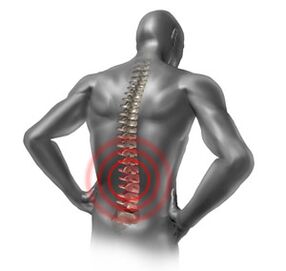
Lower back pain due to the disease is familiar to people who work with heavy weights, lead a sedentary lifestyle, and athletes.
Painful sensations with osteochondrosis do not occur immediately.They appear after prolonged wearing of heavy objects or hard work.For some, the lower back hurts immediately, for others the pain occurs every other day.
In the initial stage, pain symptoms are aching, dull in nature.Sometimes the pain shoots down the leg.Painful sensations go away if you lie down, relax, and apply warming ointment to the affected organ.The pain returns if a person carries heavy objects, is in an uncomfortable position for a long time, when shaking, sometimes when sneezing or coughing.
In stages when the disease progresses, pain due to osteochondrosis in the lumbar area is strong and prolonged.They occur with sudden movements, after being in the cold, or with short-term tension in the back muscles.
Lumbar osteochondrosis of the spine leads to:
- Impaired sensitivity in the area of the buttocks, legs, thighs, feet;
- Frequent tingling sensation in the legs;
- Impaired sweating function;
- Violation of the temperature of the skin of the legs;
- Dry skin on sore areas of the body.
Characteristics of spondyloarthrosis
Deforming osteochondrosis of the lumbar region (spondyloarthrosis) is similar in characteristics to lumbar osteochondrosis.It is easy to confuse them when both diseases occur.Differences:
- In the deforming course of the disease, the pain is not sharp, but nagging, constant;
- There is no severe pain when moving, there is a characteristic crunch in the affected joints;
- X-rays reveal differences in changes in the condition of the cartilage tissue of the spine.
A doctor can distinguish between two similar diseases and should be contacted at the slightest sign of illness.
Treatment of osteochondrosis of the lumbar spine
Before taking medications for lumbar osteochondrosis, it is worth finding and eliminating the cause of pain and disease.It is recommended to avoid physical stress on the spine and to remain in bed for a while.

For complex treatment, doctors prescribe medications - painkillers, non-steroidal anti-inflammatory drugs.Medicines are prescribed in tablets and injections: it depends on the doctor and the wishes of the patient.If the expected result is not achieved, the doctor prescribes a course of injections of glucocorticoid hormones.Affect the source of infection.
During treatment, the patient is prescribed to take B vitamins: B12, B6, B1.
Sometimes the doctor prescribes sedatives, antidepressants, and anticonvulsants.
For osteochondrosis of the lumbar spine, at the request of the patient and with his written consent, chondroprotectors are used.The drugs have not been sufficiently studied and can cause harm to the patient’s health.
The disease is treated comprehensively.In addition to medicinal effects, doctors recommend wearing a special corset, relaxing, therapeutic massage, acupuncture, swimming, and physical therapy.
Physiotherapy in the treatment of lumbar osteochondrosis
Electrophoresis for lumbar osteochondrosis is an effective method.The bottom line is that treatment is aimed at the source of the disease, the diseased organ.Nearby organs and connective tissues are not affected; medicine and current pulses do not reach them.The advantage of physiotherapy is that it is used for chronic diseases.Electrophoresis is a healing procedure in which medicine enters the body through the skin through a constantly incoming weak electric current.
The procedure is painless and takes 20 minutes.Doctors recommend 10 sessions.Treatment is carried out using special equipment, electrophoresis is done in a medical institution or dispensary.Two electrodes are placed on the patient’s skin, one moistened with a drug (analgin, novocaine, magnesium sulfate, aminophylline).
The effect of the procedure is felt after the first visit: pain goes away, spasms in the muscles of the back and neck are relieved, and blood circulation improves.
Sports activities
Sports for lumbar osteochondrosis - morning exercises, therapeutic exercises, swimming.
Morning exercises include self-massage and warming exercises for the body muscles.It is worth doing leg swings, jumping in place, and doing exercises for proper breathing.It is recommended to complete the gymnastics with water procedures.Squats and abdominal exercises are excluded.
Therapeutic gymnastics requires preparation; it is better to do it several times with an instructor.He will show and tell you how to perform developmental and relaxing exercises correctly.Shows you how to breathe correctly in class.Therapeutic gymnastics requires regularity, so it is worth doing every day.The best times are in the morning when the muscles are relaxed.
Exercises are done lying down, kneeling.The positions relieve the load on the spine and relax the back muscle groups.
A pleasant pastime within the framework of therapeutic sports is swimming.It is worth visiting the pool 4 times a week, swimming for at least 60 minutes.Water should be at the optimal temperature; cold is harmful to patients with osteochondrosis.It is useful to exercise on your back.
In medical institutions, active sports activities are organized for patients with osteochondrosis.The training program includes running, outdoor games, athletics, and rhythmics.
Taking into account age, severity of the disease, time of year, physical condition of the body, the doctor will draw up an individual training plan.
Prohibitions for lumbar osteochondrosis
Contraindications for lumbar osteochondrosis:
- During the period of exacerbation, stop playing sports and physical activity;
- Untreated neurological diseases;
- Cardiac arrhythmia;
- High blood pressure;
- Intraocular pressure, myopia.
Treatment of lumbar osteochondrosis is long-term.To overcome the disease it is worth making efforts and efforts.The main thing is to follow the doctor’s recommendations, promptly report deterioration or improvement in health, and regularly engage in therapeutic exercises.Positive results and improved well-being will not keep you waiting.